…

Polycystic ovaries
Polycystic ovary syndrome is not about cysts. It is a disorder affecting several body systems, which on ultrasound appears as an increased number of immature follicles.
What it is
The term polycystic ovaries does not describe the condition well, because ovarian cysts are an entirely different problem. The more accurate term is polyfollicular ovary syndrome: the ovaries contain many follicles that do not mature.
The cause remains unknown. The prevailing view attributes the syndrome to a disturbance of a protein chemically similar to insulin. This may be why it often appears in women with diabetes in the family history.
How it presents
The syndrome appears at a young age. The most common signs are cycle irregularities, even absence of periods, acne, oily skin, increased hair growth on the face, chest, abdomen and limbs, male-pattern hair loss, and weight gain with fat mainly around the abdomen.
Because ovulation often fails, meaning no egg is released, cysts may form from unruptured follicles and fertility may be reduced. Dark, thickened skin folds may appear on the neck, armpits and chest, and anxiety or depression may occur.
The syndrome concerns a woman's health as a whole. It is associated with lipid disturbances and a higher risk of cardiovascular problems, diabetes and high blood pressure later in life, with pregnancy complications such as miscarriage, hypertension, pre-eclampsia, gestational diabetes and preterm birth, with a higher risk of endometrial cancer, and with metabolic syndrome at menopause. It often coexists with thyroid or adrenal conditions and raised prolactin. This is why early diagnosis and treatment matter.
How it is diagnosed
Diagnosis is clinical first, based on cycle irregularities, weight, acne and hair growth. It is confirmed with a hormone test from a simple blood sample, taken on the second to fifth day of the cycle.
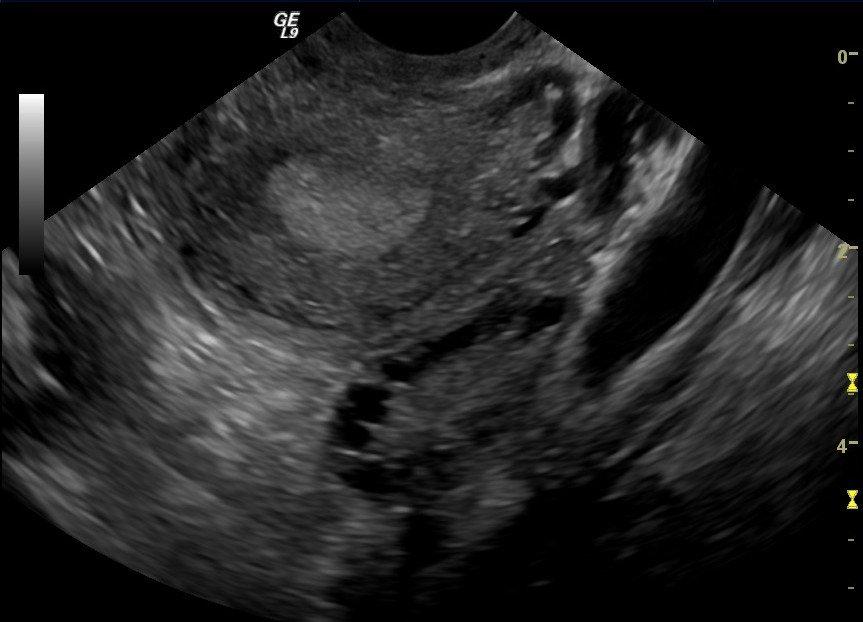
A transvaginal ultrasound shows the multiple immature follicles. However, about 30% of ovaries with this appearance may be normal. For this reason the syndrome is not diagnosed from the ultrasound alone; we weigh the clinical and laboratory findings carefully, to avoid over-diagnosis.
How it is treated
Treatment aims first to restore a regular cycle and to counter the raised androgens, meaning male hormones. In women over 18, specific preparations containing oestradiol and cyproterone acetate, a strong anti-androgen, may be used; they also act as contraceptives. A blood-clotting assessment, known as thrombophilia screening, is done beforehand.
In milder cases ordinary contraceptive pills may be used to regulate the cycle and settle the ovaries. Hormonal treatment is long-term and review takes place every three months.
Frequently asked questions
My ultrasound showed polycystic ovaries. Do I have the syndrome?
Not necessarily. About 30% of ovaries with a polyfollicular appearance are normal. The syndrome is diagnosed from the combination of symptoms, hormone tests and ultrasound. Bring the result to your visit so we can assess it as a whole.
Can I get pregnant with polycystic ovaries?
The syndrome can make conception harder, because ovulation often fails and the follicles are of poor quality. It is also linked to a higher risk of pregnancy complications. If you are planning a pregnancy, tell us at your first visit so we can arrange the appropriate assessment.
What tests are needed?
You need a hormone test from a blood sample on the second to fifth day of the cycle and a transvaginal ultrasound. Because the syndrome often coexists with thyroid or adrenal conditions, related tests may also be needed. We give you the list of tests at your visit.
How long does treatment last?
Hormonal treatment is long-term. Review takes place every three months, so we can monitor the cycle and the symptoms. Discuss at your visit which regimen suits your age and history.