…
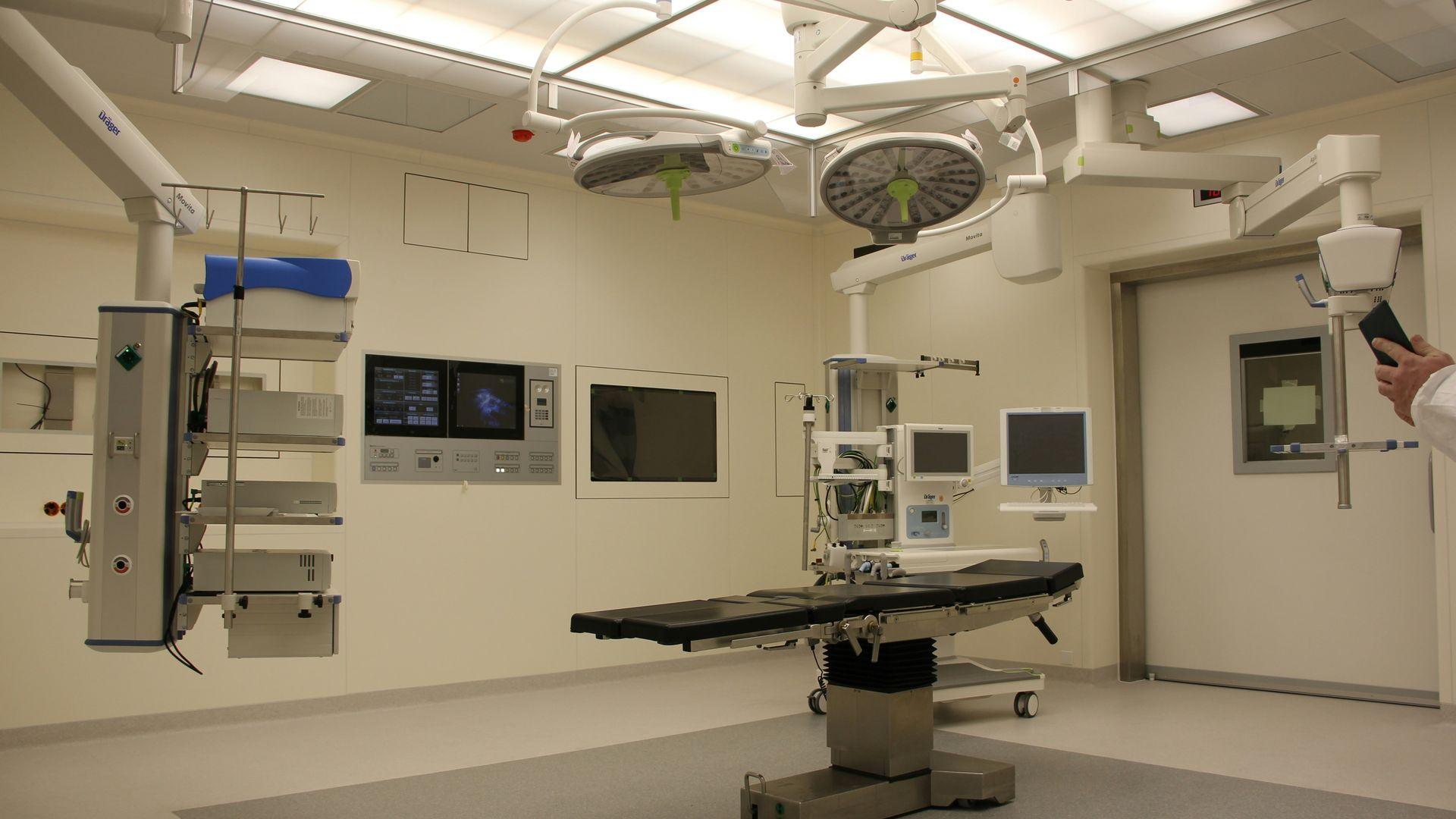
Hysteroscopy and laparoscopy
Hysteroscopy and laparoscopy are endoscopic methods: we look inside the womb or the abdomen with a thin optical instrument, for diagnosis or for an operation.
What hysteroscopy is
The word comes from the Greek for womb and for observing. With a thin endoscope passed through the cervix we view the cavity of the womb. For good visibility the cavity is distended with a fluid or gas delivered by a special device.
Hysteroscopy is diagnostic or operative. It is indicated for infertility, recurrent miscarriage, adhesions inside the womb, submucous fibroids, polyps, a uterine septum, foreign bodies such as a coil, endometrial hyperplasia, abnormal uterine bleeding and suspected endometrial cancer. It is not done during active infection of the womb or pelvis, in pregnancy, with heavy bleeding, with cervical cancer, or after a recent uterine perforation.
It can be done at any phase of the cycle. We prefer right after the period, especially when removing polyps, fibroids, adhesions or a coil. When investigating possible hyperplasia, we prefer the second half of the cycle. Complications are uncommon and usually relate to the anaesthesia or the distension medium.
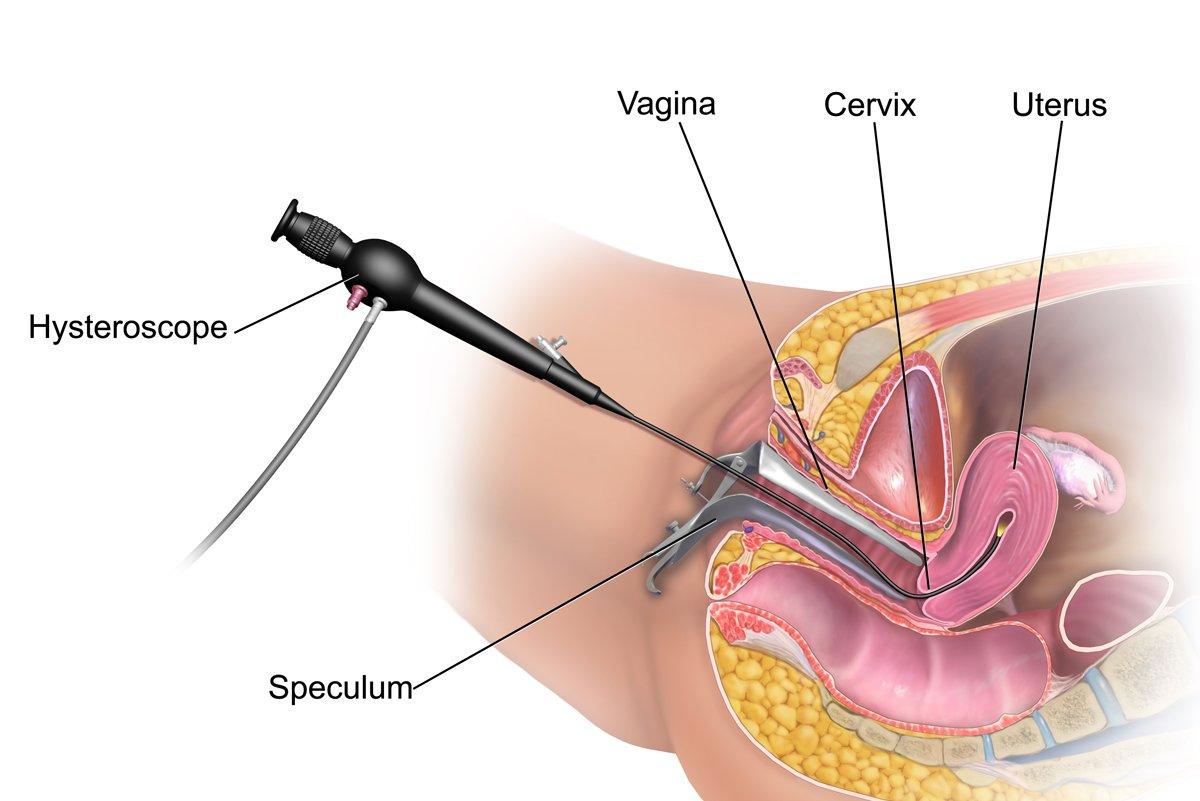
What laparoscopy is
Laparoscopy is a surgical technique now used for most gynaecological operations. It is done under general anaesthesia. Through a small opening at the navel we fill the abdomen with carbon dioxide to create space and insert a telescope with a cold light source. Two or three further small openings admit the surgical instruments. Two surgeons take part, working with a magnified image.
Compared with open surgery, the post-operative burden is smaller and the hospital stay is usually one day.
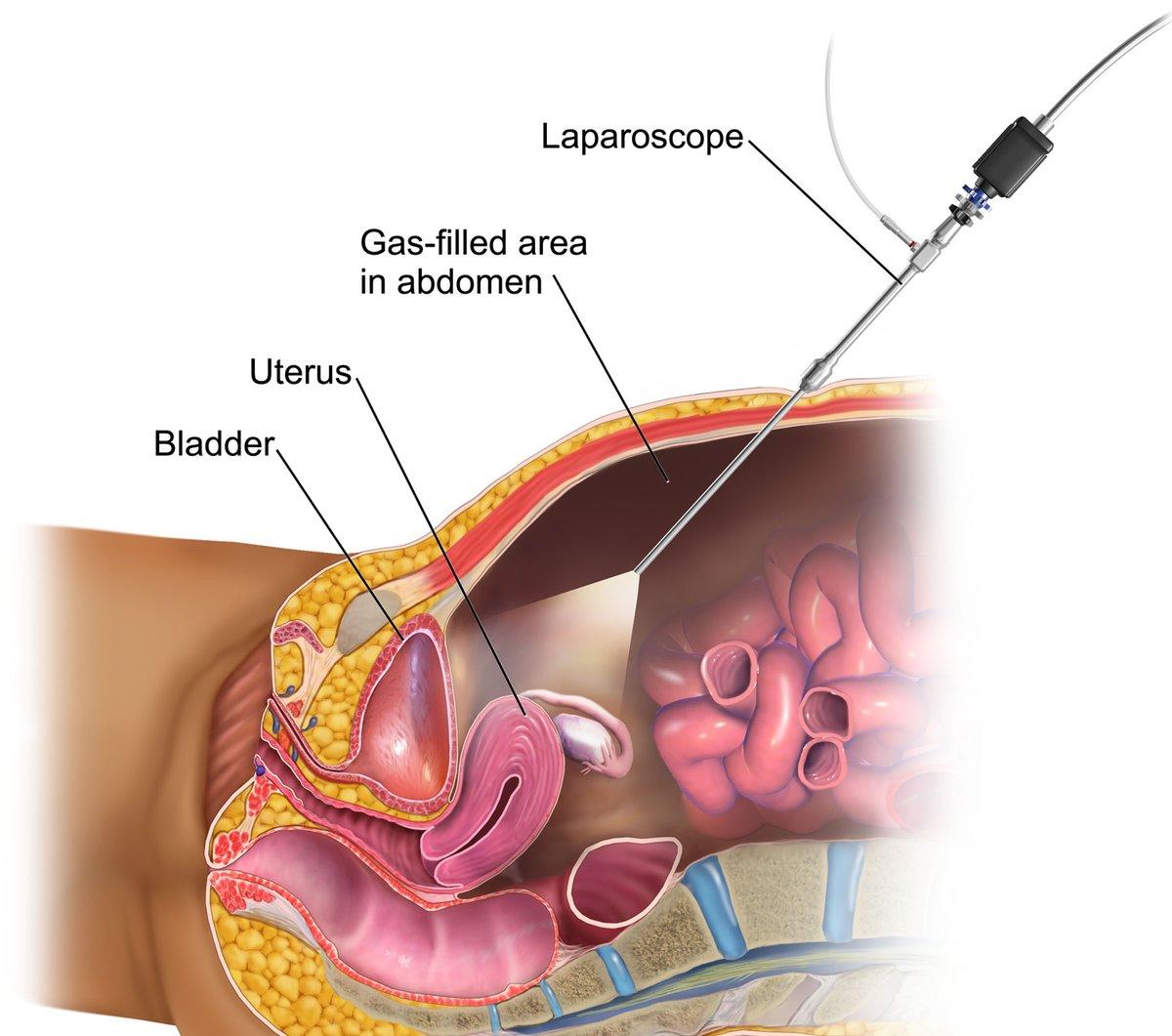
When laparoscopy is done
Diagnostic laparoscopy is done for infertility, chronic pelvic pain, suspected endometriosis or chronic pelvic infection, assessment of a congenital uterine anomaly, acute abdominal pain and suspected ectopic pregnancy.
Operative laparoscopy covers division of adhesions and tubal procedures for infertility, removal of ovarian cysts and other ovarian masses, treatment of endometriosis, removal of fibroids, hydrosalpinx or an ectopic pregnancy, removal of the womb, ovaries and tubes, sterilisation and operations for gynaecological cancer.
It is not indicated in bowel obstruction, a very large abdominal mass, severe heart or lung disease, after multiple abdominal operations, with infection of the abdominal wall or peritonitis, in marked obesity, with clotting disorders or with a diaphragmatic hernia. If any of these applies, we discuss the appropriate alternative with you.
Robotic surgery
Robotic surgery is not a new technique but a development of laparoscopy. The surgeon sits at a console and their movements are transmitted to arms that hold the camera and instruments, through three or four small openings. The surgeon sees a magnified three-dimensional image.
The gynaecologist always does the operating. The robotic system has no autonomy; it is a tool in the surgeon's hands. Operations that can be done robotically include ovarian cysts, hydrosalpinx, ectopic pregnancy, fibroids, endometriosis, removal of the womb, division of adhesions, urogynaecological problems and malignant tumours of the womb and cervix.
Frequently asked questions
What is the difference between hysteroscopy and laparoscopy?
Hysteroscopy is done through the cervix, with no incision, and shows the inside of the womb. Laparoscopy is done through small openings in the abdomen, under general anaesthesia, and shows the womb, tubes and ovaries from the outside. Which one you need depends on the problem; we decide this at your visit.
How long will I stay in hospital after laparoscopy?
The hospital stay after laparoscopy is usually one day, and the post-operative burden is smaller than with open surgery. The exact time depends on the operation and your condition. We will inform you before the operation.
When in my cycle is hysteroscopy done?
It can be done at any phase. For removal of a polyp, fibroid, adhesions or a coil we prefer right after the period. For investigation of endometrial hyperplasia we prefer the second half of the cycle. We set the date together.
In robotic surgery, does the robot operate?
No. The gynaecologist always operates, from the console. The system transmits their movements to the instruments and does not act on its own. Whether your case suits a laparoscopic or robotic approach is something we discuss at your visit.