…
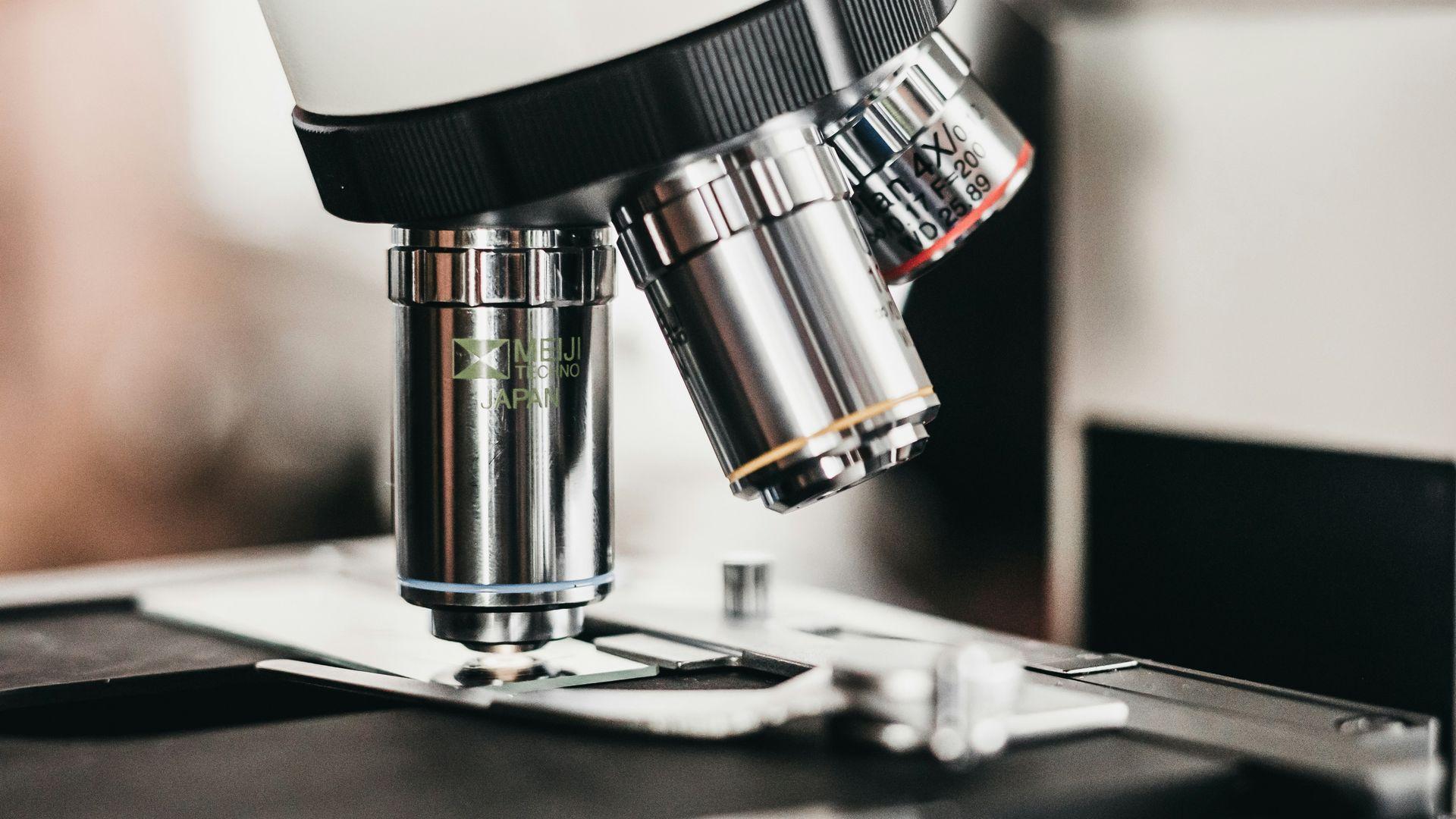
Tests for the couple
The investigation covers both partners. For the man the basic test is the semen analysis; for the woman the check focuses on ovulation, the fallopian tubes and the womb.
Where the check begins
Infertility concerns the woman and the man equally. For that reason we do not first test the woman exhaustively and only then the man. The tests for both proceed in parallel, so that no time is lost. Often the cause is a small problem, in one or the other, that simple tests can identify.
For the man, the World Health Organization classifies laboratory semen tests into three categories: basic (semen analysis and antisperm antibodies), optional (biochemical analysis of the seminal fluid, semen culture, sperm vitality test) and research tests, which are done in special cases. We always start with the basic ones.
The woman’s check
In the woman the investigation follows the possible causes. We check whether ovulation is taking place normally and whether there is a hormonal disorder such as polycystic ovary syndrome. We check the womb for fibroids or congenital anomalies such as a septum, and the fallopian tubes for blockage after inflammation. Transvaginal ultrasound and hysterosalpingography, an X-ray of the womb and tubes with contrast dye, are the basic imaging tests for the last two.
Depending on the history, the check may extend to endometriosis, adhesions from earlier operations or infections, and immunological causes. Which tests are needed, and in what order, is decided with you at the first visit.
The semen analysis
The semen analysis is the most basic semen test. It has two parts. The macroscopic examination assesses volume, colour, liquefaction time, viscosity and pH. The microscopic examination measures the number of sperm, their motility, their morphology, any clumping, and the presence of other cells such as white blood cells. Each parameter is compared with the World Health Organization reference values.
The terms you will see on the result have simple meanings. “Oligospermia” means a low concentration of sperm. “Asthenospermia” means that few of them move forward. “Teratospermia” means that there are fewer normal forms than expected. “Azoospermia” means that no sperm at all were found in the sample. When motility is very low, a vitality test is done, which shows how many of the immotile sperm are alive.
If the semen analysis calls for it, the optional tests follow. Biochemical analysis of the seminal fluid shows how the prostate, the seminal vesicles and the epididymides, the glands that produce the fluid, are working. The culture checks for bacteria, mycoplasma, ureaplasma and chlamydia, because their presence affects sperm motility in particular.
How to give the sample correctly
The sample is given after 1 to 7 days of abstinence, by masturbation at the laboratory, into a wide-mouthed glass container. Plastic containers are avoided. Alternatively, collection can be done at home during intercourse with a special condom. Ordinary condoms and withdrawal are not suitable, because the first part of the ejaculate, which contains most of the sperm, is lost.
If the sample is collected at home, it must reach the laboratory within 30 to 60 minutes. On the way, extreme temperatures, below 20 and above 40 degrees Celsius, are avoided. The simplest way is to carry the container in an inside pocket, close to the skin.
For the initial assessment at least two samples are needed, no less than 7 days and no more than 3 months apart. If the two results differ significantly, further samples are examined. A single semen analysis is not enough to draw a conclusion.
Frequently asked questions
How many days of abstinence are needed before the semen analysis?
From 1 to 7 days. Longer is no better; long sexual abstinence is one of the factors that impair semen quality. Follow the laboratory’s instructions.
Can the sample be given at home?
Yes, with a special condom during intercourse, not an ordinary condom and not withdrawal. The sample must reach the laboratory within 30 to 60 minutes, in a pocket close to the skin, away from cold or heat. Ask the laboratory beforehand so that you obtain the right condom.
The first semen analysis was abnormal. Does that mean my partner is infertile?
Not necessarily. Semen parameters vary from sample to sample, which is why the initial assessment requires at least two samples, 7 days to 3 months apart. If the results differ significantly, further samples are examined. Bring all the results with you to the visit.
What do the terms oligospermia and asthenospermia mean?
Oligospermia is a low concentration of sperm relative to the reference values. Asthenospermia is reduced forward motility. The two terms describe a finding, not its cause. The cause is looked for in the history and in the next tests.
Is a semen culture needed as well?
The culture is one of the optional tests and is requested when the semen analysis or the history justifies it. It checks for aerobic and anaerobic bacteria, mycoplasma, ureaplasma and chlamydia. Their presence affects sperm motility. We will tell you whether it is needed in your case.